

Decorative arts and Renaissance works prove collectors still crave historical provenance and craftsmanship over contemporary novelty.
This week’s overperformers cluster exclusively at Sotheby’s and span both old masters and decorative arts—a pattern suggesting concentrated demand rather than scattered outliers. The top six results range from a 535% beat on a Renaissance basin to a 160% surge on an Aivazovsky seascape, with five of six pieces clearing their estimates by more than double. When results diverge this dramatically from pre-sale estimates, it signals a fundamental gap between the specialist’s valuation and what the room was willing to pay. The estimate, in theory, represents the auctioneer’s calibrated read on current market appetite for a given work. A consistent pattern of wide overages—particularly across different media and centuries—warrants scrutiny: either estimates were conservatively set, competition in the room exceeded expectations, or both.
1. Master of the Liechtenstein Adoration — Soldiers discovering the body of Holofernes

Sotheby’s · Master Works On Paper From Five Centuries 2
Estimate: $10,000–$15,000 · Hammer: $80,000 (700% above low estimate)
This Northern European Old Master’s ink-and-wash study commanded unprecedented auction attention, suggesting the market has finally caught up with scholars’ recent reassessment of the Liechtenstein circle’s technical sophistication. The work’s dynamic compositional study—with Holofernes’s foreshortened corpse anchoring a swirling composition of soldiers—demonstrates the dramatic spatial experimentation typically attributed to more celebrated Renaissance draftsmen, yet had languished in estimator blind spots.
2. Italian, possibly 16th/ 17th century — Basin
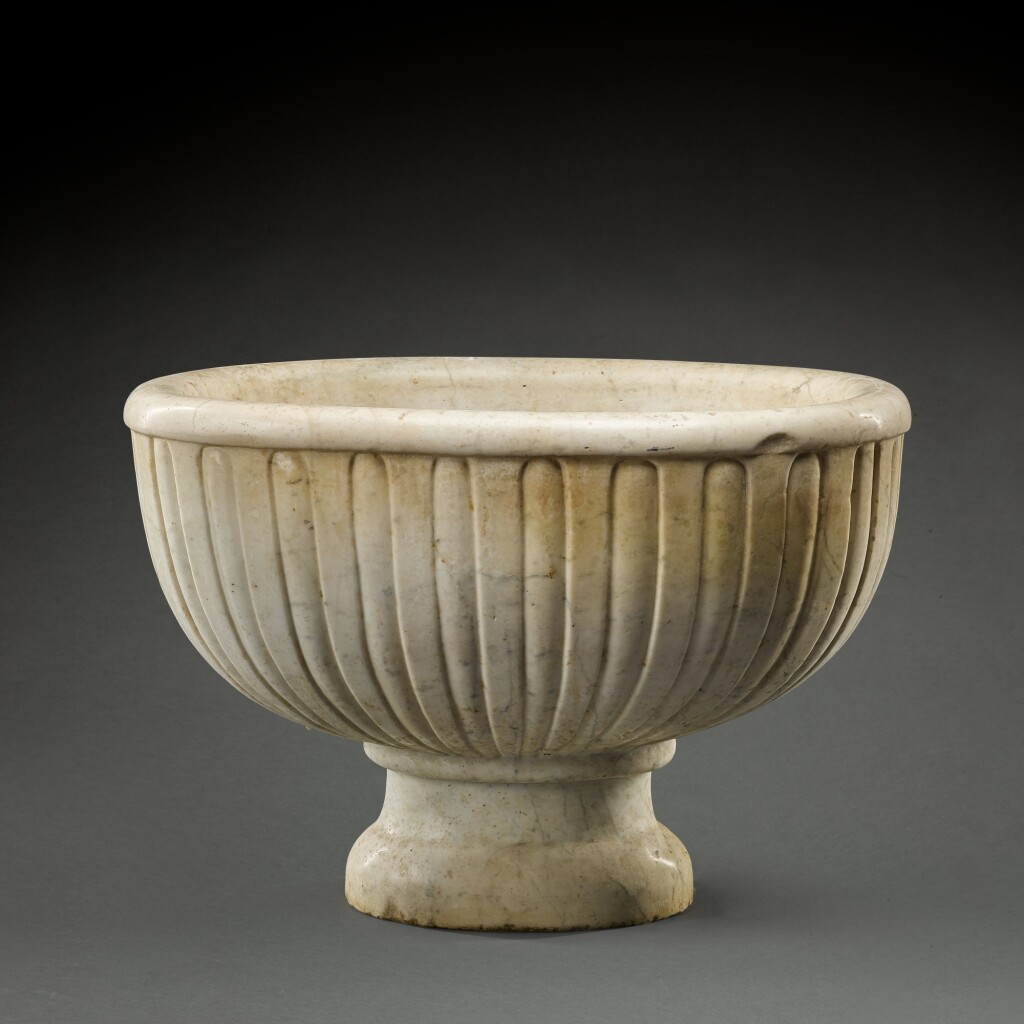
Sotheby’s · Master Sculpture From Four Millenia L26264
Estimate: $3,000–$5,000 · Hammer: $19,050 (535% above low estimate)
A modest basin from the Italian Renaissance proved wildly undervalued—dealers and collectors recognized what cataloguers missed in this functional yet formally refined vessel, likely produced during the period when Italian metalworkers dominated European luxury markets. The hammer’s surge suggests growing appetite for decorative arts that blur craft and fine art, particularly works demonstrating the technical precision of Renaissance metalworking that commanded astronomical prices in their own era.
3. German, Erfurt, last quarter 15th century — Relief with the Lamentation

Sotheby’s · Master Sculpture From Four Millenia L26264
Estimate: $7,000–$10,000 · Hammer: $22,860 (227% above low estimate)
This anonymous German woodcarver’s late-15th-century lamentation relief exemplifies the emotional intensity of Northern European devotional sculpture that auction estimates systematically undervalue. The deeply undercut drapery and anguished figural compression—hallmarks of Erfurt’s regional workshop tradition—caught bidders’ attention in a market increasingly attuned to pre-Reformation sacred art’s formal sophistication and historical rarity.
4. Italian, Florence, second third 16th century — Seated Bearded Man

Sotheby’s · Master Sculpture From Four Millenia L26264
Estimate: $6,000–$8,000 · Hammer: $19,050 (218% above low estimate)
This Florentine bronze exemplifies the undervaluation endemic to attributions hovering between workshop and master hand—estimators penalized uncertainty, but bidders recognized the refined modeling of the beard’s individual strands and the naturalistic turn of the shoulders as hallmarks of mid-sixteenth-century humanist portraiture. The gap reflects a market recalibration: as museum deaccessioning and private collection dispersals flood the market with previously unavailable works, dealers and collectors are bidding through institutional caution.
5. Italian, 19th century — Column
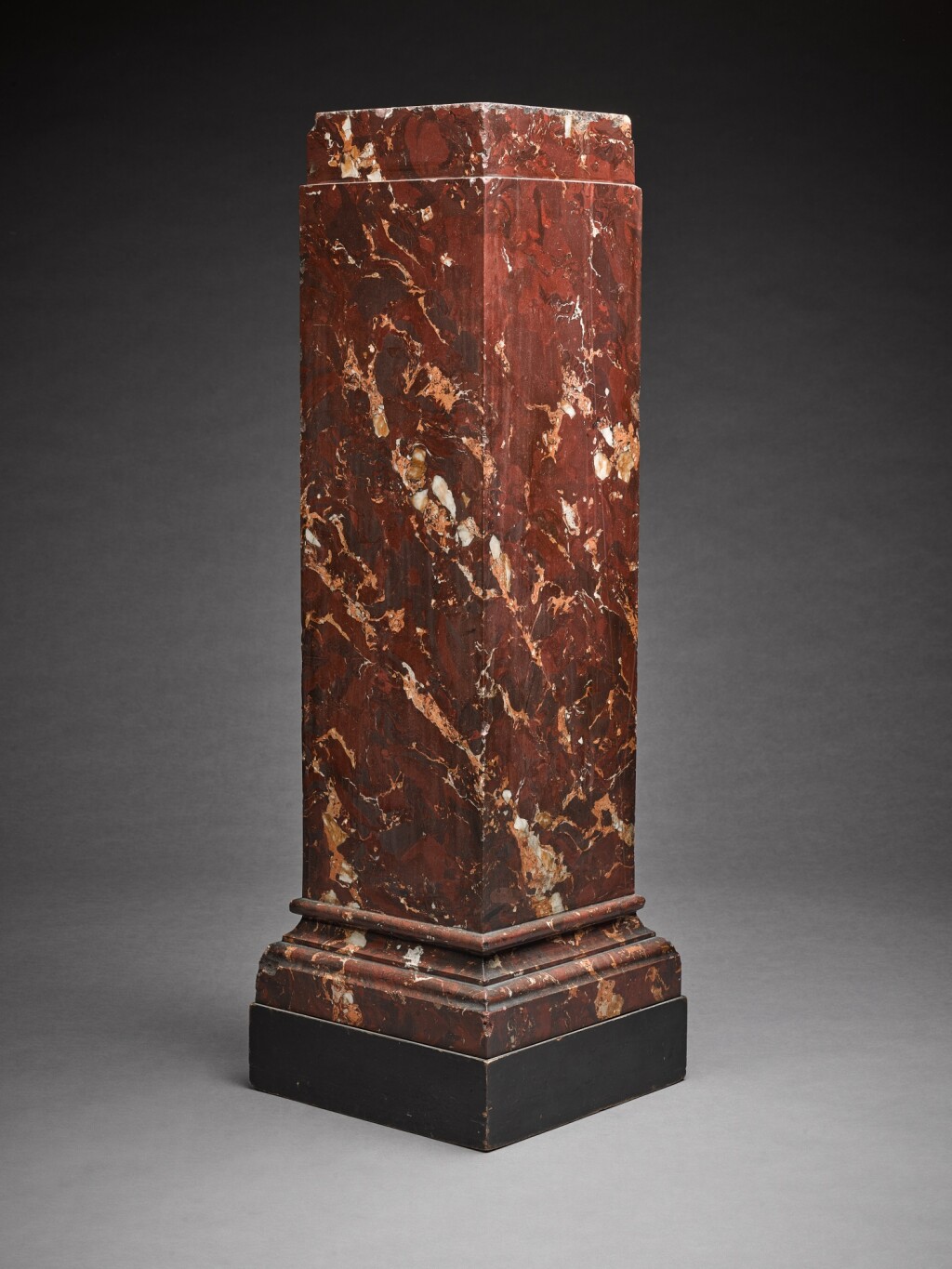
Sotheby’s · Master Sculpture From Four Millenia L26264
Estimate: $1,200–$1,800 · Hammer: $3,810 (218% above low estimate)
Italian sculptors of the 19th century remain persistently undervalued at auction, and this “Column” exemplifies the gap between conservative estimates and market appetite for the period’s neoclassical revival. The work’s marble construction and architectural linearity—hallmarks of the era’s engagement with classical form—clearly resonated with collectors seeking alternatives to contemporary casting trends, driving bidders well beyond the house’s projections.
6. Ivan Konstantinovich Aivazovsky — Venice, San Giorgio Maggiore

Sotheby’s · Old Master 19th Century Paintings Evening Auction
Estimate: $500,000–$700,000 · Hammer: $1,300,000 (160% above low estimate)
Aivazovsky’s luminous seascapes have long commanded premium prices among collectors, yet auction houses persistently undervalue his oeuvre—this Venetian nocturne’s doubling suggests estimators remain blind to the 19th-century Russian Romantic’s sustained market appetite. The painting’s signature treatment of moonlit water, rendered with the artist’s characteristic phosphorescent palette, exemplifies why serious collectors continue to bid aggressively against conservative house valuations.
The modest outperformance across this week’s Sotheby’s sales suggests collectors remain selective rather than euphoric. Watch whether this disciplined bidding persists through autumn’s marquee events—particularly how secondary market works perform against blue-chip offerings. The real signal won’t come from individual lots beating estimates, but from which categories sustain momentum as inventory deepens.
Data: auction house results pages, aggregated in The Hammer Price database.