

This week’s explosive results suggest collectors are rediscovering overlooked European paintings with newfound urgency and appetite.
This week’s overperformers cluster almost entirely within Old Masters and historical works at a single house—Sotheby’s—suggesting concentrated rather than diffuse market strength. Five of six lots traded well above their low estimates, with four clearing by more than 170 percent. The concentration matters: it signals not broad-based revaluation across the market, but rather a specific audience’s appetite for European paintings from the Renaissance through eighteenth century. When lots beat estimates this decisively and repeatedly, the gap itself becomes data worth reading. Estimates represent a specialist’s calibrated judgment about where willing buyers and sellers meet. A consistent pattern of wide overages indicates either that estimates were positioned conservatively—a deliberate strategy—or that actual demand outpaced the house’s own forecast. The distinction between those two possibilities shapes how we interpret what the market is actually pricing.
1. Niccolò Codazzi — An architectural capriccio
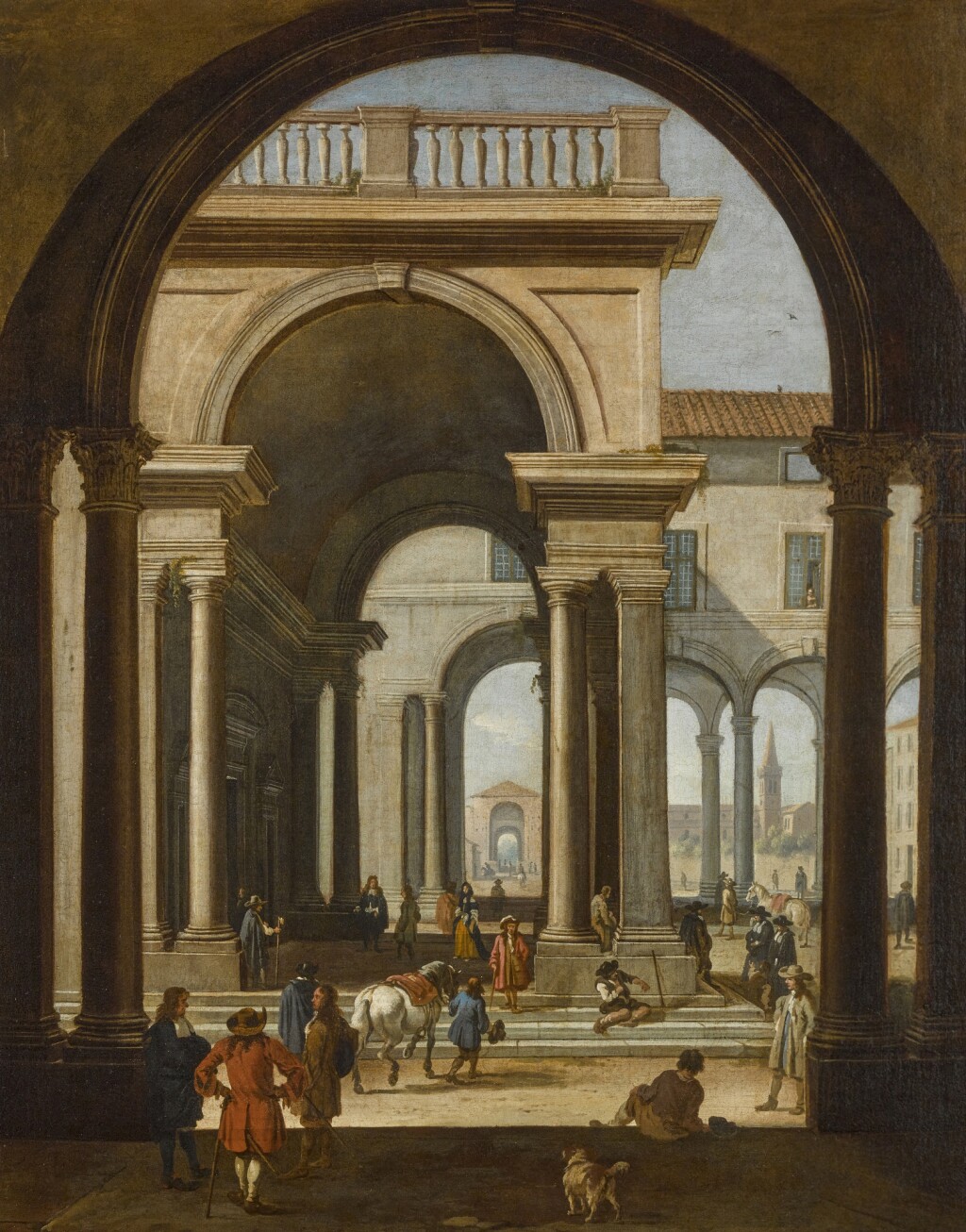
Sotheby’s · Old Master Paintings Works On Paper Day Auction L26034
Estimate: $10,000–$15,000 · Hammer: $69,850 (598% above low estimate)
Codazzi’s architectural capriccios have emerged as a collecting category unto themselves, yet auction houses continue pricing them conservatively—a gap that aggressive bidders exploited here. The Baroque painter’s precisely rendered imaginary structures, combining classical ruins with fantastical geometry, command premium prices among specialists who recognize him as a foundational figure in the capriccio genre’s development.
2. After William Hogarth, circa 1739 — Sir Francis Dashwood At His Devotions

Sotheby’s · Old Master Paintings Works On Paper Day Auction L26034
Estimate: $10,000–$15,000 · Hammer: $60,960 (510% above low estimate)
This satirical print’s hammer price reflects persistent undervaluation of Hogarth’s circle rather than any recent rediscovery—the market has simply outpaced conservative estimates for 18th-century British social commentary. The work’s attribution to Hogarth’s orbit, combined with its caustic depiction of Dashwood’s libertine theatricality, carries particular currency among collectors tracking the intersection of art history and cultural transgression, a specialty that consistently outperforms paper-based Old Master projections.
3. Theodoor van Thulden — The Gods mourning Phaeton

Sotheby’s · Old Master Paintings Works On Paper Day Auction L26034
Estimate: $20,000–$30,000 · Hammer: $88,900 (344% above low estimate)
Van Thulden’s Baroque mythological scene exemplifies the undervaluation of Rubens’ circle by contemporary estimators—this Antwerp master’s dramatic compositions command growing collector interest as Old Master specialists reassess the Baroque periphery. The work’s muscular draftsmanship and dynamic figure arrangement, hallmarks of van Thulden’s history painting practice, clearly resonated with bidders attuned to the current reappraisal of Northern European religious and mythological narrative art.
4. Antonio Joli — A capriccio of the Bacino di San Marco, Venice, from the entrance to the Giudecca, with the Punta della Dogana and San Giorgio Maggiore through a vaulted loggia
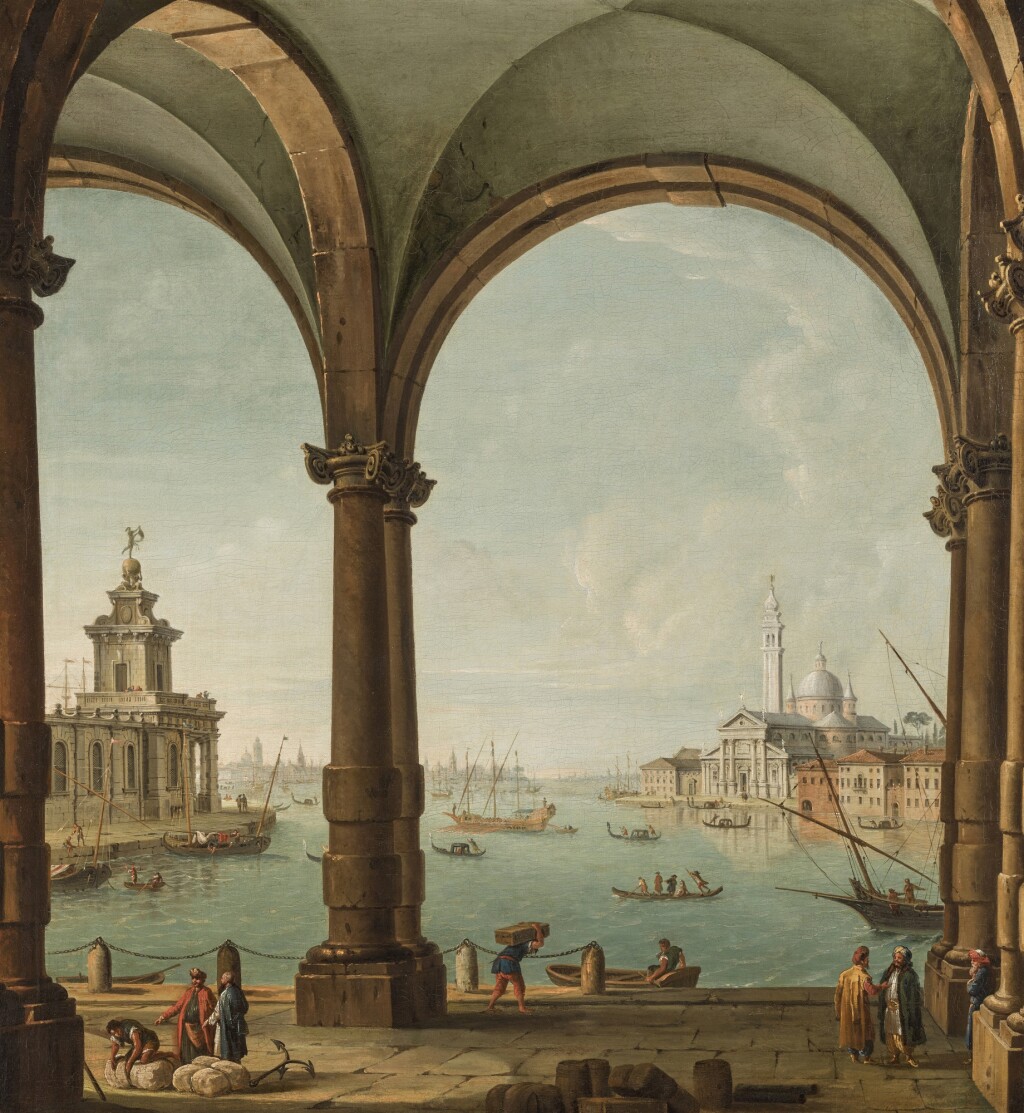
Sotheby’s · Old Master Paintings Works On Paper Day Auction L26034
Estimate: $80,000–$120,000 · Hammer: $228,600 (186% above low estimate)
Joli’s vedute command renewed collector appetite as the Old Master market tilts toward architectural capricci—a category long undervalued relative to figure-dominated compositions. This particular sheet’s vaulted loggia framing device, a signature Joli conceit that creates spatial recession through recession, likely resonated with buyers seeking sophisticated compositional rigor beyond mere topographical record-keeping.
5. Luca Giordano — Saint Bartholomew

Sotheby’s · Old Master Paintings Works On Paper Day Auction L26034
Estimate: $15,000–$20,000 · Hammer: $40,640 (171% above low estimate)
Giordano’s dramatic Baroque handling and robust market appetite for seventeenth-century Neapolitan painters—increasingly recognized as undervalued against their Roman and Florentine counterparts—likely caught estimators off-guard. The work’s dynamic figural composition and fluid brushwork exemplify the prolific master’s characteristic fusion of Caravaggio’s tenebrism with operatic movement, a combination that has gained institutional traction in recent scholarship.
6. Jean-Pierre Pincemin — Sans titre

Sotheby’s · Modern Contemporary Discoveries Pf2659
Estimate: $6,000–$8,000 · Hammer: $16,000 (167% above low estimate)
Pincemin’s untitled work doubled its high estimate, signaling renewed appetite for the French abstract painter’s kinetic compositions after years of market dormancy. The lot’s surge likely reflects collectors’ rekindled interest in 1980s geometric abstraction—a segment that has gained traction as post-war minimalism commands record prices. Pincemin’s signature use of industrial materials and optical movement appears to have resonated with bidders seeking alternatives to the well-trodden minimalist canon.
As Sotheby’s continues to navigate volatile market conditions, watch for how mid-tier lots—those $500K–$2M range staples—perform in coming weeks. This segment has historically signaled broader collector sentiment before premium categories shift. Track whether estimates remain conservative or drift upward, suggesting renewed confidence in secondary market depth.
Data: auction house results pages, aggregated in The Hammer Price database.